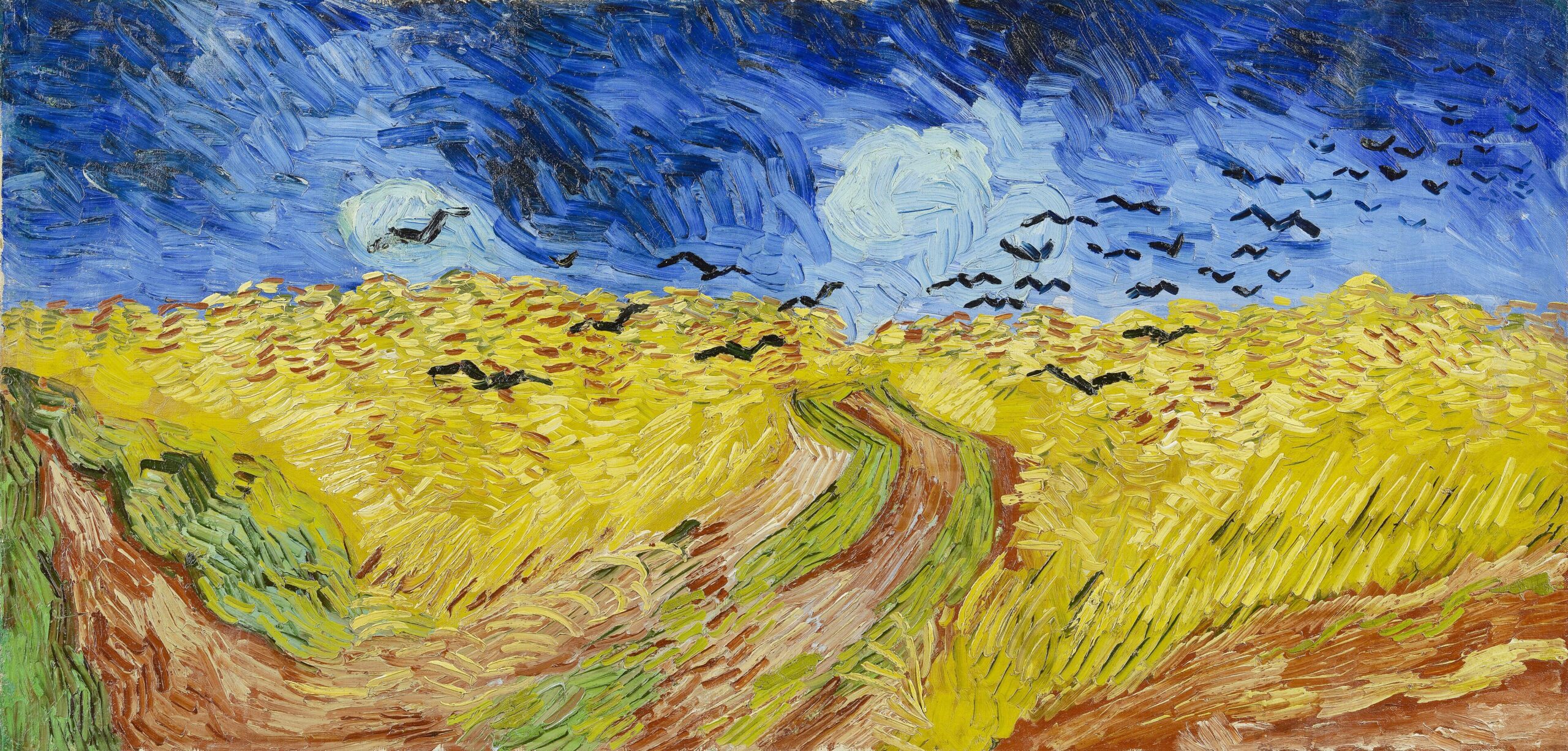
Wheatfield with Crows

Wheatfield with Crows (Dutch: Korenveld met kraaien) is a July 1890 painting by Vincent van Gogh. It has been cited by several critics as one of his greatest works.

It is commonly stated that this was Van Gogh’s final painting. This association was popularized by Vincente Minnelli’s 1956 biopic Lust for Life, which depicts Van Gogh painting it immediately before shooting himself. His final painting in actuality was Tree Roots.The evidence of his letters suggests that Wheatfield with Crows was completed around 10 July and predates such paintings as Auvers Town Hall on 14 July 1890 and Daubigny’s Garden. Moreover, Jan Hulsker has written that a painting of harvested wheat, Field with Stacks of Wheat (F771), must be a later painting.

The Starry Night

The Starry Night, is an oil-on-canvas painting by the Dutch Post-Impressionist painter Vincent van Gogh. Painted in June 1889, it depicts the view from the east-facing window of his asylum room at Saint-Rémy-de-Provence, just before sunrise, with the addition of an imaginary village. It has been in the permanent collection of the Museum of Modern Art in New York City since 1941, acquired through the Lillie P. Bliss Bequest. Described as a “touchstone of modern art”, The Starry Night has been regarded as one of the most recognizable paintings in the Western canon.

Iconic Masterpieces

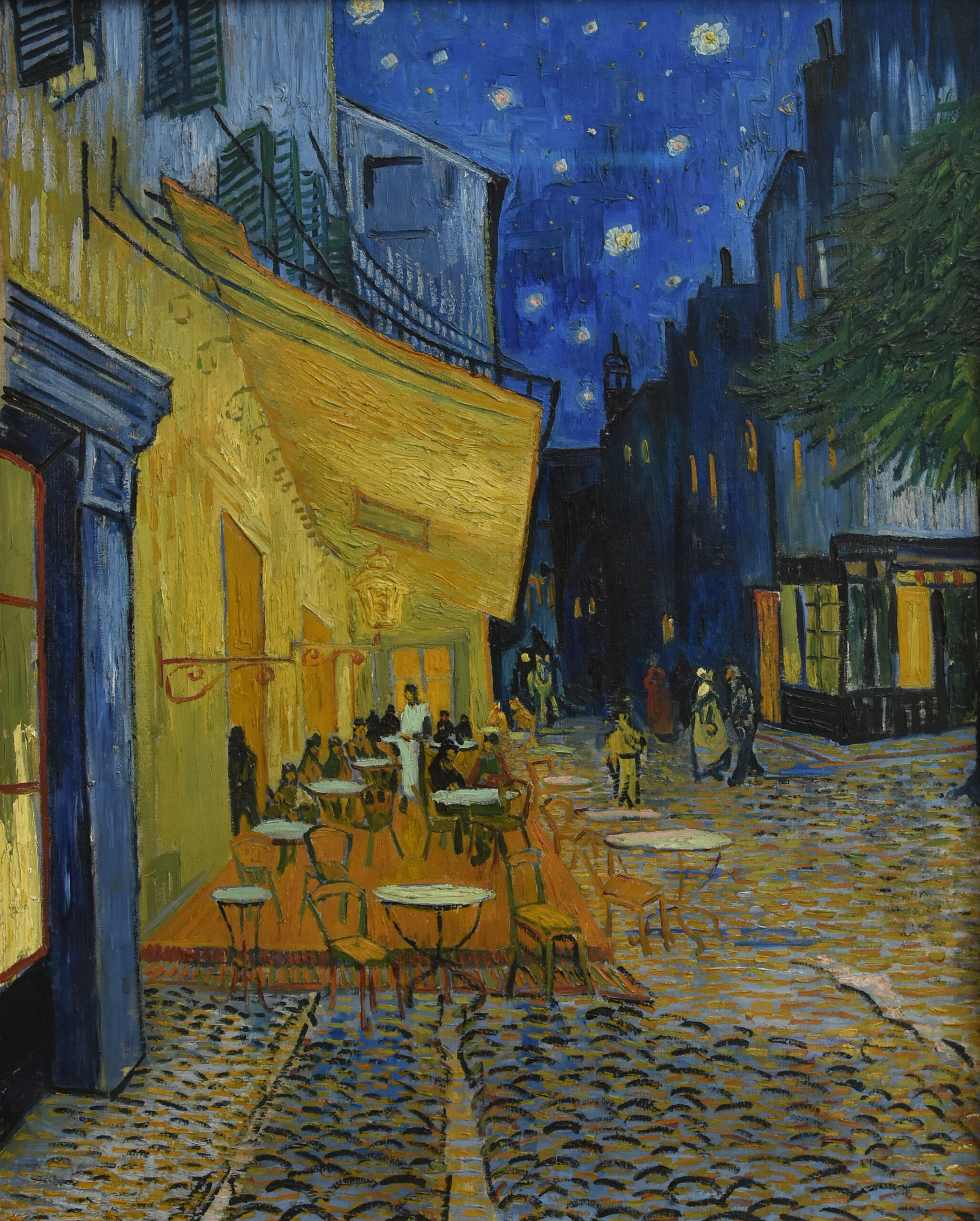
  • Café Terrace at Night (1888): A vibrant, on-location painting of a café in Arles, notable for its lack of black paint despite being a night scene.
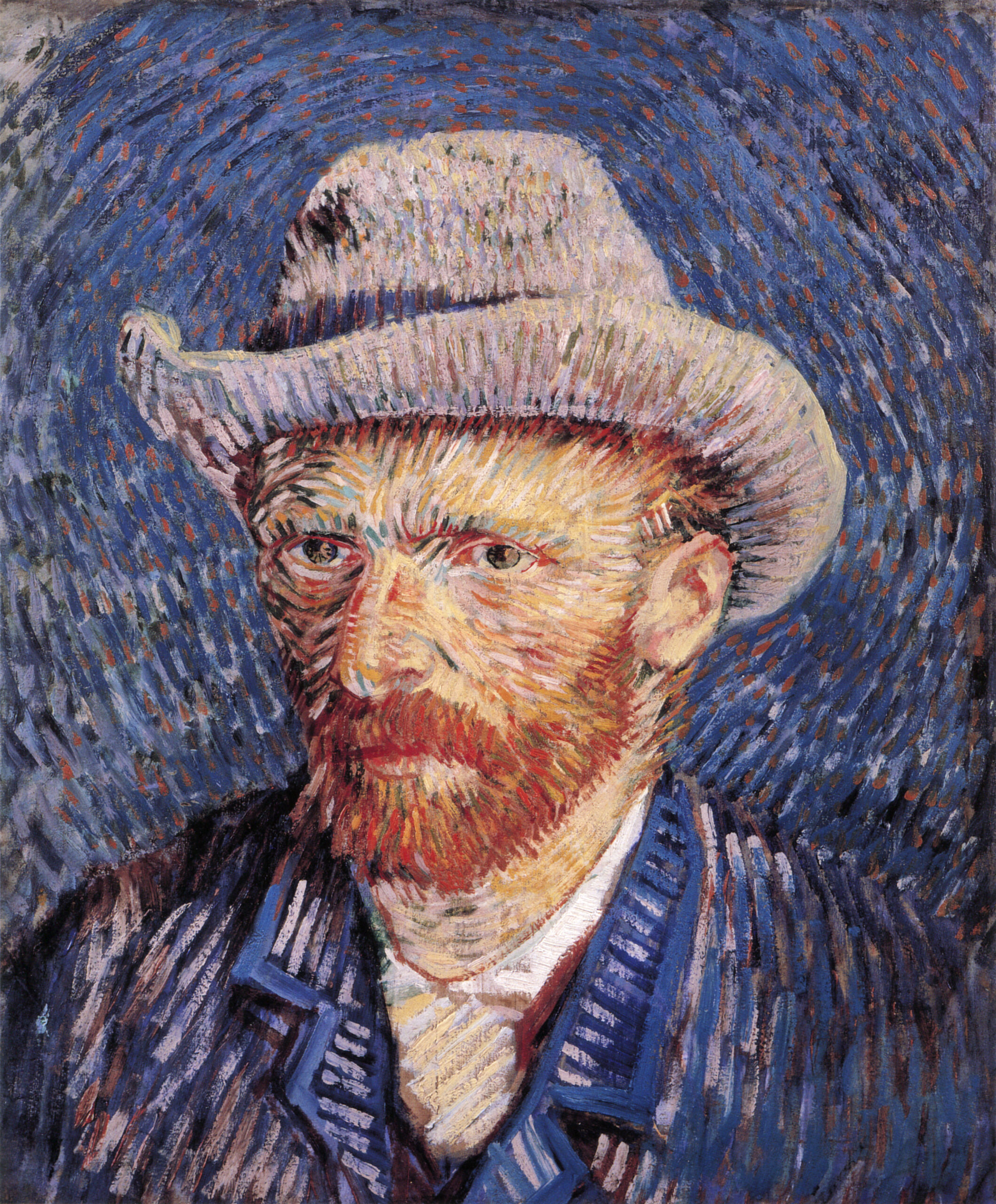
  • Self-Portrait with Grey Felt Hat (1887-1888): Held in the Van Gogh Museum, this Paris-era portrait demonstrates his mastery of color and pointillist-inspired brushwork.
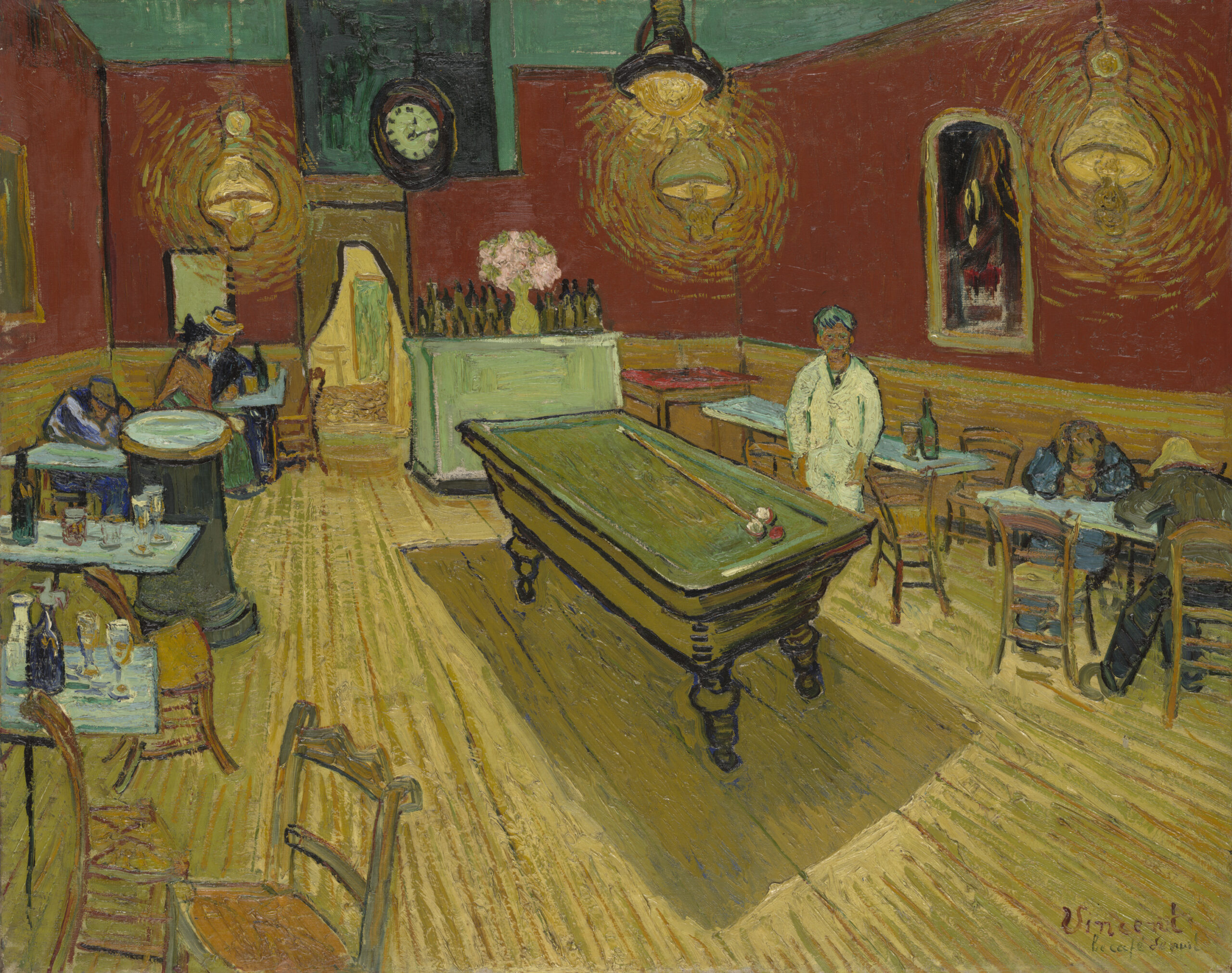
  • The Night Café (1888): A, visceral scene of a café interior.
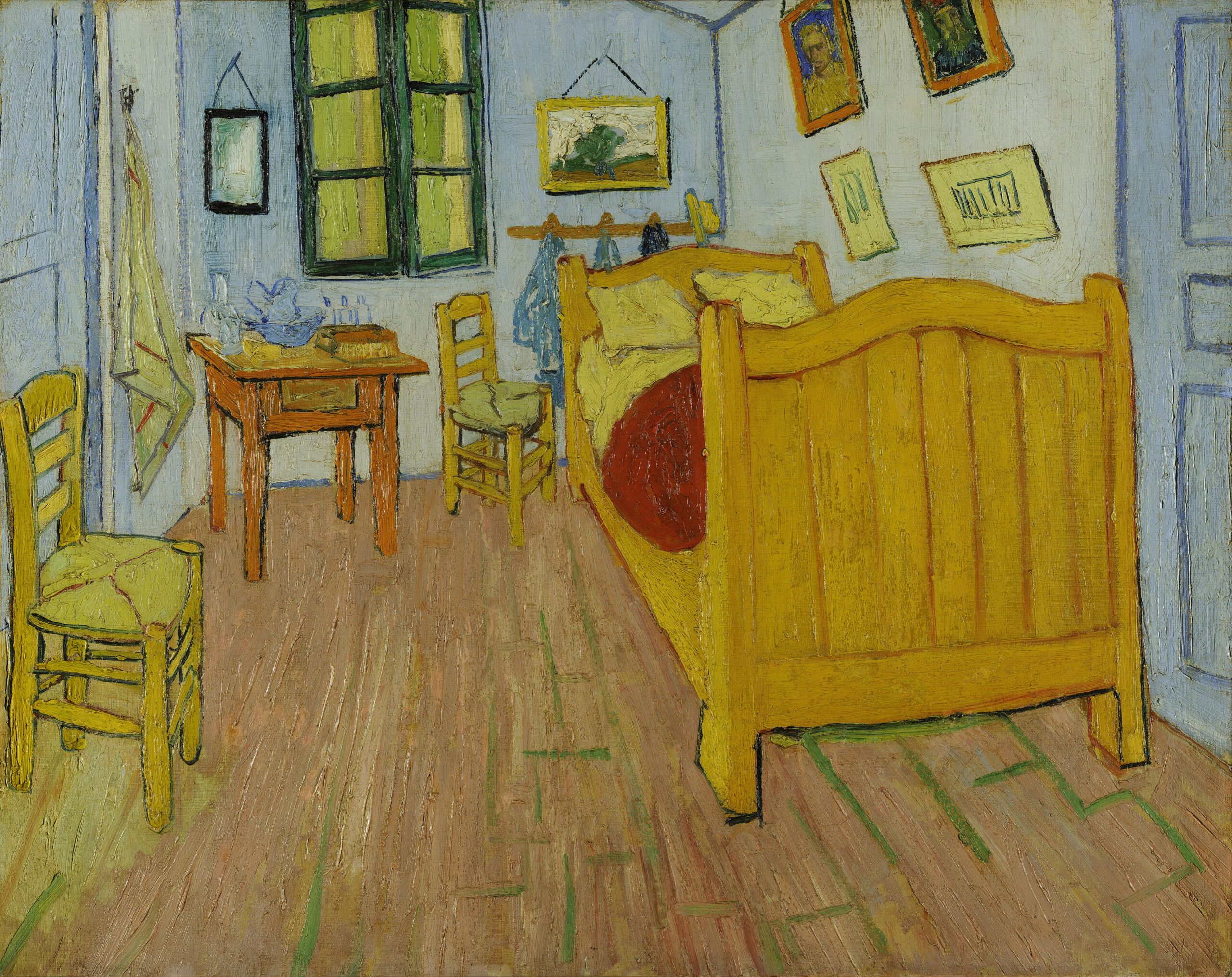
  • The Bedroom (1888): A depiction of his personal room in Arles, characterized by bright, emotional colors.

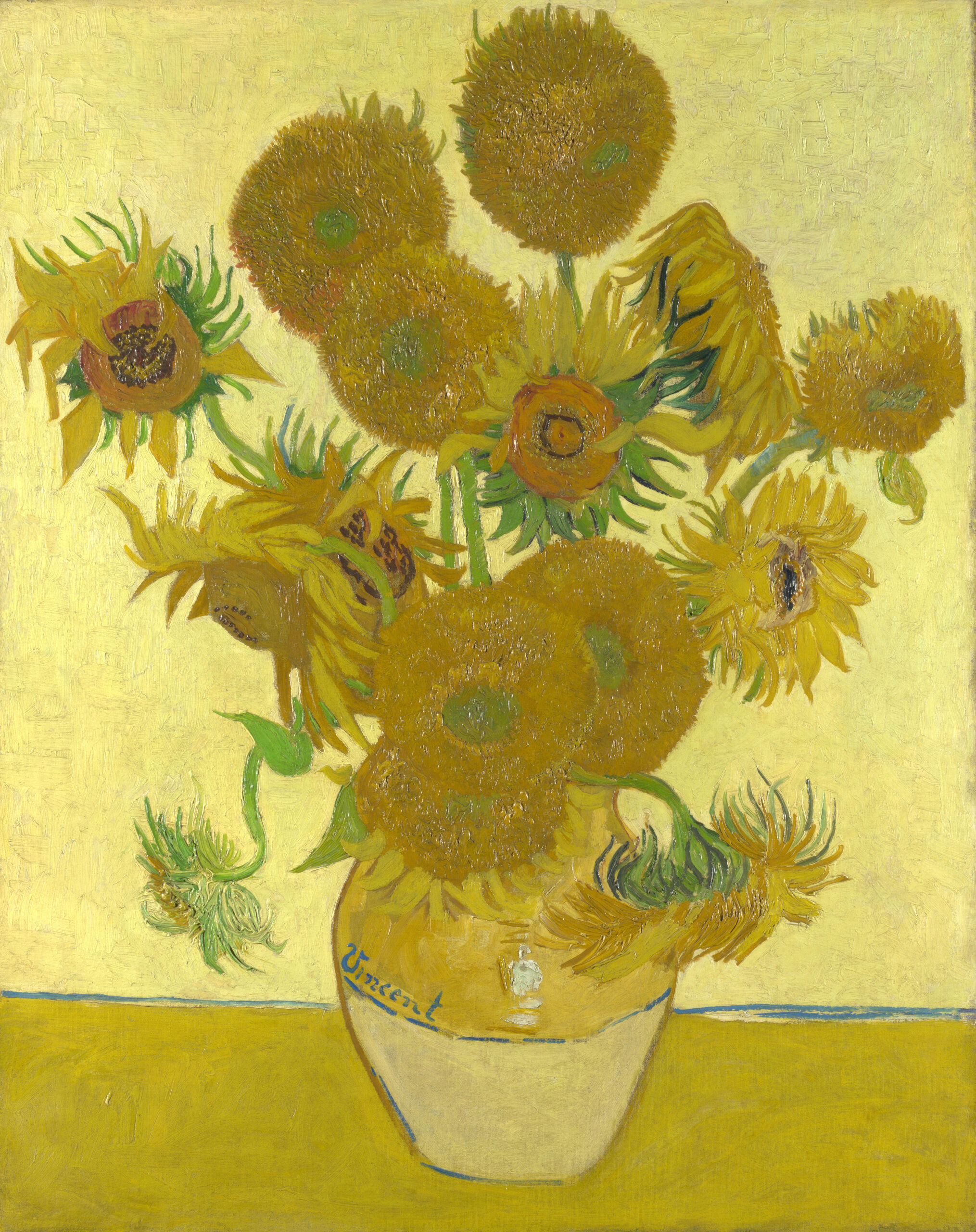
Sunflowers

Van Gogh series

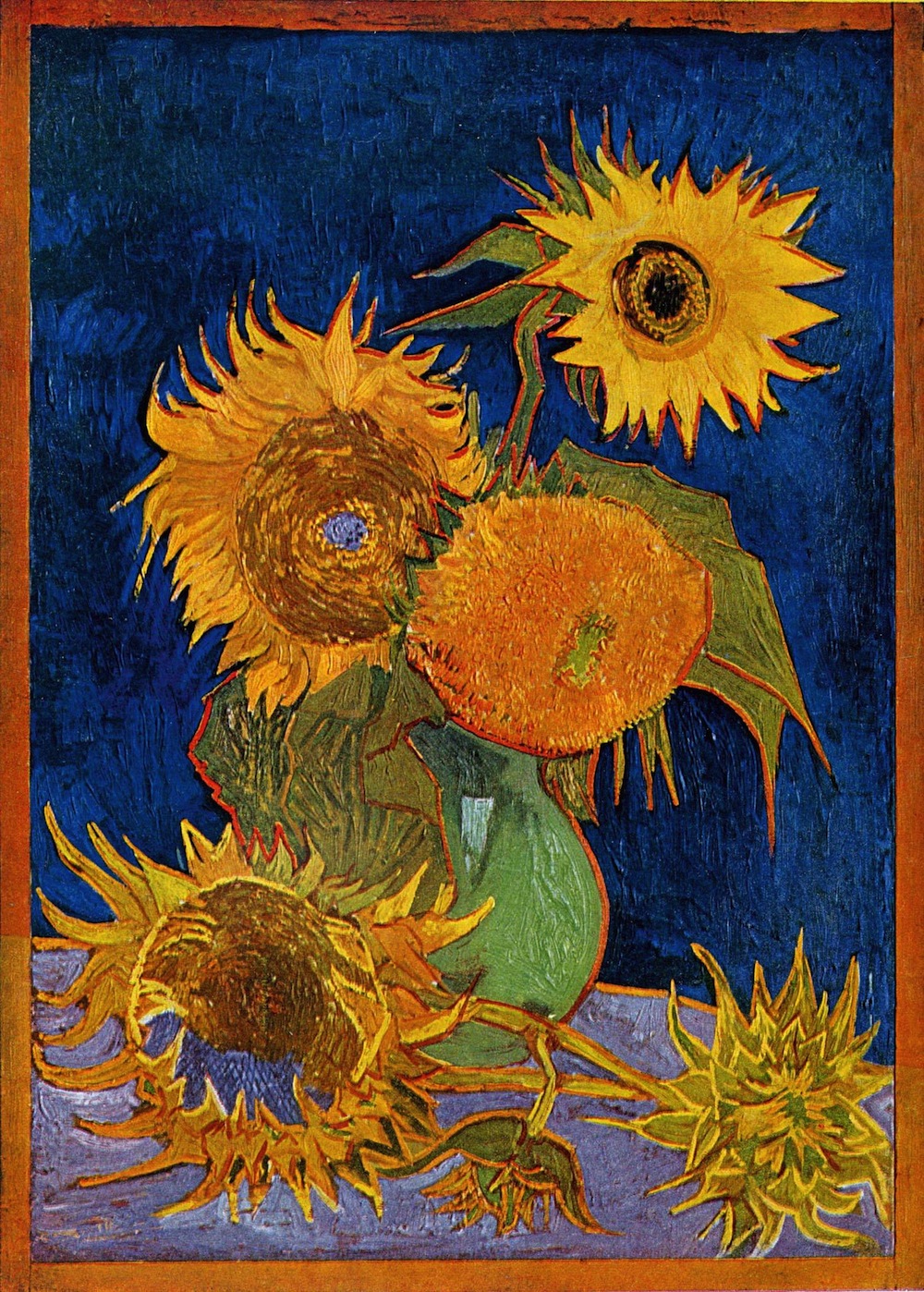
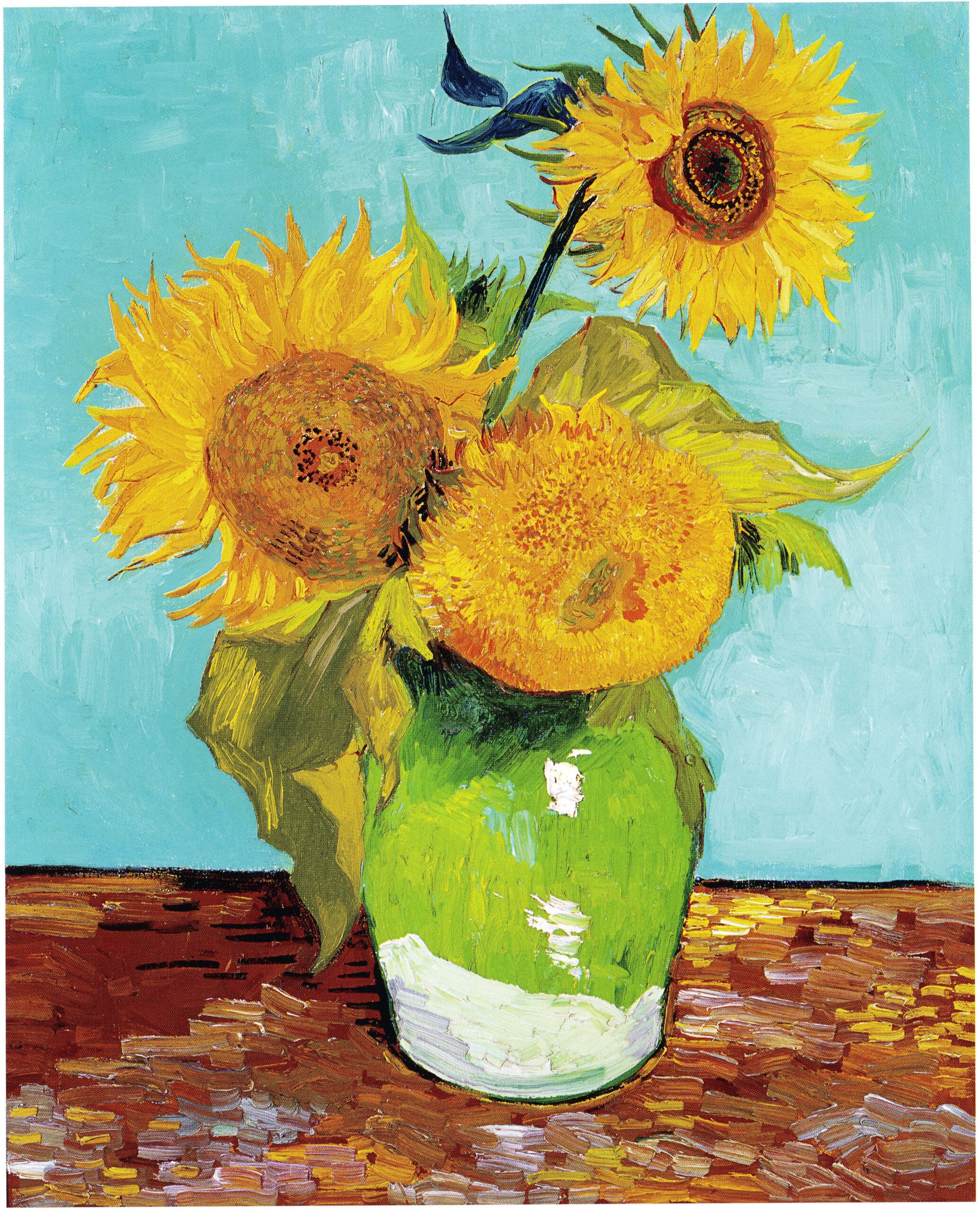
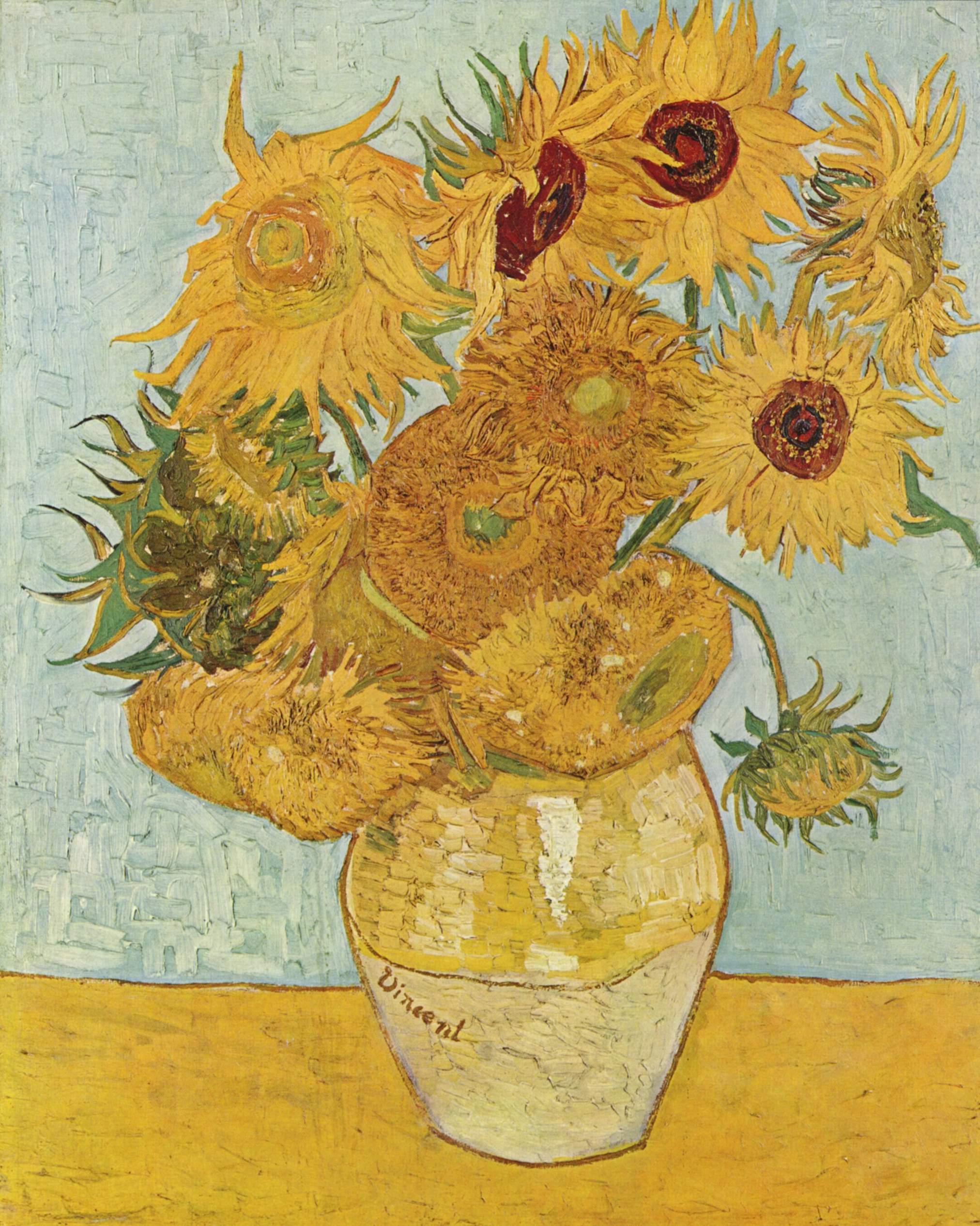
Sunflowers (original title, in French: Tournesols) is the title of two series of still life paintings by the Dutch painter Vincent van Gogh. The first series, executed in Paris in 1887, depicts the flowers lying on the ground, while the second set, made a year later in Arles, shows a bouquet of sunflowers in a vase. In the artist’s mind, both sets were linked by the name of his friend Paul Gauguin, who acquired two of the Paris versions. About eight months later, van Gogh hoped to welcome and impress Gauguin again with Sunflowers, now part of the painted Décoration for the Yellow House that he prepared for the guestroom of his home in Arles, where Gauguin was supposed to stay.